If you have PCOS and you feel like you’re tired all the time, dealing with constant carb cravings, struggling with weight gain (or weight loss feels impossible), and your period is unpredictable… there’s a good chance insulin resistance is part of the picture.
A lot of people with PCOS hear the term insulin resistance constantly—but no one really explains:
- what it means,
- what’s happening in your body,
- and why it matters so much for PCOS symptoms.
So let’s fix that. I’m going to break it down and finally explain what is going on in you body in this article and this video.
This article and video are for educational purposes only, not medical advice—work with your healthcare provider for personalized care.
Table of contents
- What Is Insulin Resistance (Finally Explained)?
- What Happens When You Have Insulin Resistance?
- Why Insulin Resistance Can Cause Weight Gain (and Make Weight Loss Hard)
- Why Insulin Resistance Can Raise Testosterone (and Affect Periods + Skin + Hair)
- Why You Get Intense Carb Cravings (and Feel Like You Can’t Stop)
- So What Can You Do to Improve Insulin Resistance?
- Insulin Resistance Isn’t Just About Food
- Quick insulin sensitivity check-in:
- What Are Your Next Steps?
Hi, I’m Meggie 👋
I’m Meggie Connelly, a Registered Dietitian, Culinary Nutritionist, and I also have PCOS. I love teaching realistic ways to use food (and lifestyle) to improve PCOS symptoms—without extreme rules or perfection.
When I work with clients to reduce symptoms, I usually look at three big, connected areas:
- Insulin resistance
- Chronic inflammation
- Gut health
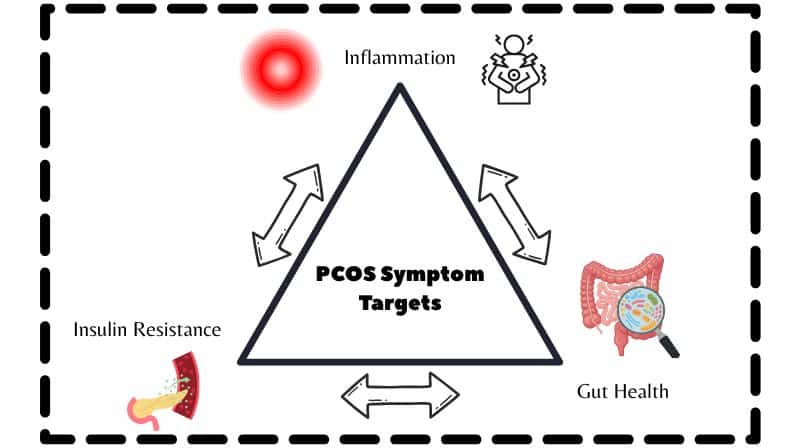
Think of these root drivers of symptoms like a triangle—they all influence each other. But today we’re focusing on the one that tends to drive a lot of the symptoms you’re feeling:
Insulin Resistance.
What Is Insulin Resistance (Finally Explained)?
First, what is insulin? Insulin is a growth hormone and acts like a key to open up your cells so glucose (energy) can go inside and be used by that cell.
Insulin resistance means your cells aren’t responding to insulin the way they should. It’s like the keys aren’t fitting into the cell door.
Here’s what normal blood sugar and insulin looks like:
- You eat carbohydrates (carbs).
- Your body breaks those carbs down into glucose (blood sugar).
- Your blood sugar rises (this is normal).
- Your pancreas releases insulin.
- Insulin acts like a key that helps open your cells so glucose can move inside and be used for energy.
- Blood sugar comes back down gently.
In a perfect world, your blood sugar rises and falls like smooth rolling hills.
What Happens When You Have Insulin Resistance?
With insulin resistance, insulin still gets released… but your cells don’t respond as well.
So the process looks more like this:
- You eat carbs → glucose enters your bloodstream → blood sugar rises
- Your pancreas releases insulin (the “key”)
- But the “door” doesn’t open easily (your cells don’t recognize insulin well)
- Your brain thinks: “Blood sugar is still high—send more insulin!”
- So your body releases more insulin… and more insulin… and more insulin
Eventually, enough insulin builds up that glucose gets into the cells.
But now you’re left with extra insulin floating around in your bloodstream—more than your body needed for that meal.
And that extra insulin is where symptoms can snowball.
Quick note about carbs (because this matters)
Carbs aren’t automatically “bad.” They’re your body’s main fuel source.
But some carbs break down fast, and some break down slowly. If you have insulin resistance (or PCOS), you’ll usually feel best when you choose carbs that digest more slowly so blood sugar rises more gently—like:
Whole grains
Beans and lentils
Fruits
Vegetables
Why Insulin Resistance Can Cause Weight Gain (and Make Weight Loss Hard)
Insulin is a storage hormone. When insulin is high, your body is more likely to store energy—often as fat.
This made sense historically (storing energy helped humans survive). But now, for many of us with consistent food access, frequent high insulin can keep the body stuck in “store fat mode.”
That’s one reason why PCOS can feel like:
- it’s easy to gain weight,
- and frustratingly hard to lose weight.
It’s not laziness. It’s physiology.
Why Insulin Resistance Can Raise Testosterone (and Affect Periods + Skin + Hair)
Your ovaries are very sensitive to insulin.
When insulin levels stay high, your ovaries can respond by producing more testosterone. That can contribute to symptoms like:
- Irregular or missing periods
- Acne
- Hair thinning on the scalp
- Extra hair growth on the face/body
So insulin resistance doesn’t just affect blood sugar—it can affect your sex hormones, too.
Why You Get Intense Carb Cravings (and Feel Like You Can’t Stop)
Here’s the other sneaky part:
When your body releases a big surge of insulin, blood sugar can sometimes drop too quickly.
And your brain does not like fast drops. It wants those calm “rolling hills,” not a rollercoaster.
So when blood sugar falls quickly, your brain hits the panic button:
- “Eat!”
- “I need sugar!”
- “Carbs right now!”
That’s why cravings with PCOS often feel urgent—not casual.
Not “a little chocolate sounds nice,” but:
- “I can’t focus until I eat carbs.”
- “Once I start, it’s hard to stop.”
- “It feels like primal hunger.”
And here’s the cycle that can happen:
spike → crash → crave → spike → crash → crave
This is a big reason you might feel:
- tired and fatigued,
- stuck in cravings,
- and like your symptoms are always flaring.
So What Can You Do to Improve Insulin Resistance?
Good news: insulin resistance often responds really well to small, consistent changes.
Build blood sugar–balancing meals
To keep blood sugar steadier, aim for meals that include:
- Fiber-rich carbs
- Protein
- Healthy fats
This combo slows digestion and helps blood sugar rise more gently—so you get more of those rolling hills, and fewer spikes/crashes.
Simple way to remember it:
Fiber + protein + fat = steadier energy and fewer cravings
✅Want done-for-you ideas blood sugar balancing meals for PCOS and insulin resistance? Start here → [Free Insulin Resistance Meal Plan for PCOS + Video]
Insulin Resistance Isn’t Just About Food
Remember the insulin key + cell door example?
Sometimes the issue isn’t that you don’t have the key. It’s that the door is rusty and creaky.
The good news is you can “oil the hinges” and improve insulin sensitivity with a whole-person approach.
Beyond nutrition, insulin sensitivity improves with:
- Movement/exercise (your muscles use glucose more efficiently when you move)
- Sleep (poor sleep can worsen insulin resistance and cravings)
- Stress management (stress hormones can push blood sugar up and amplify cravings)
- Medications and/or supplements (when appropriate and individualized)
This is not about perfection. It’s about building a few habits that make your body more responsive to insulin over time.
Quick insulin sensitivity check-in:
Ask yourself:
- Am I getting enough sleep most nights?
- Am I eating balanced meals consistently (not skipping then crashing later)?
- Am I getting some movement most days (walking counts)?
- Is stress constantly high?
- Should I discuss meds/supplements with my healthcare team?
What Are Your Next Steps?
1) Grab the free 7-day insulin resistance meal plan
This is a great place to start if you want easy guidance and meal ideas—without a strict, stressful plan.
👉 Free 7-day Insulin Resistance meal plan for PCOS here]
2) Want personalized help?
If you want one-on-one support, I work with clients privately. I accept insurance and may be able to work with you depending on your state and your plan.
3) Need help staying consistent and want to reduce the stress of figuring out what to eat for PCOS?
The PCOS Meal Prep Membership offers weekly dietitian created meal plans AND live meal prep/cooking/coaching sessions each week to help you stay accountable to your goals.
You also get access to PCOS nutrition courses on cooking, fertility, prediabetes and more.
👉 Check out the PCOS Meal Prep Membership here!
Pin for later!

Meggie Connelly MS, RD, LDN is a Registered Dietitian Nutritionist, PCOS Advocate and Culinary Nutritionist who helps individuals with PCOS and chronic dieters go from confused, frustrated and exhausted to confident and balanced.